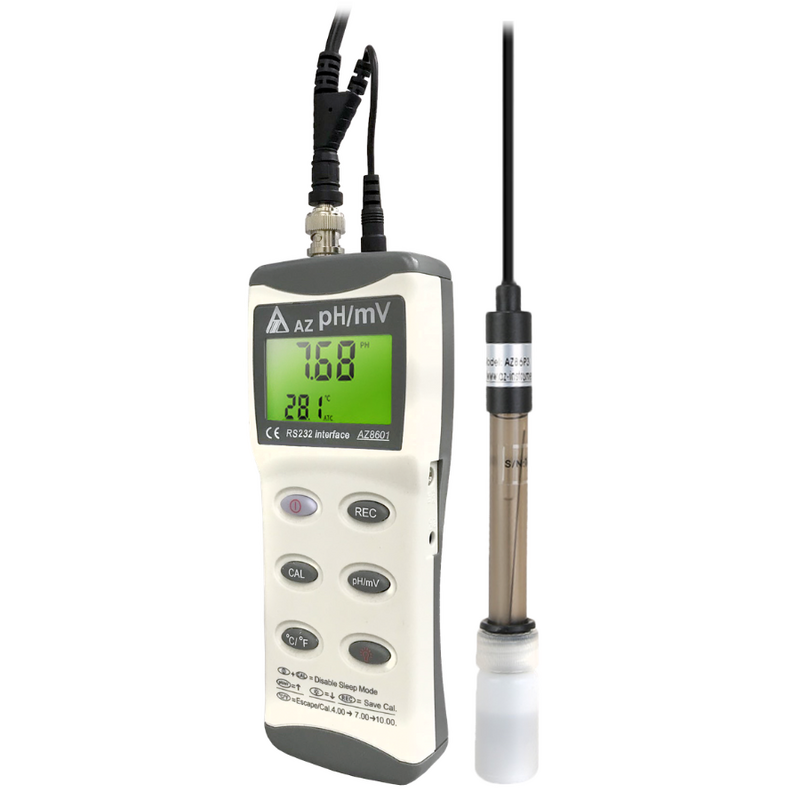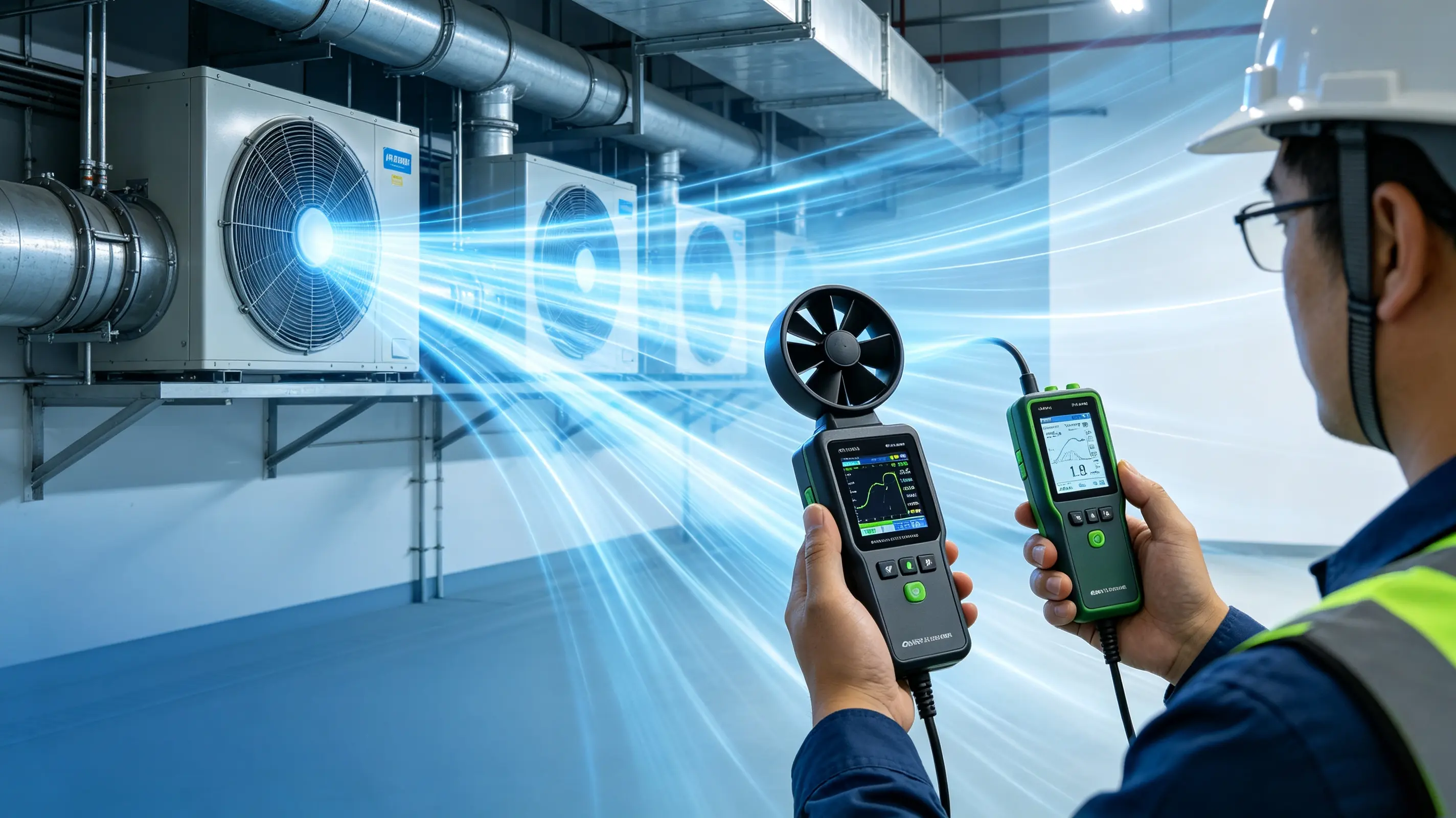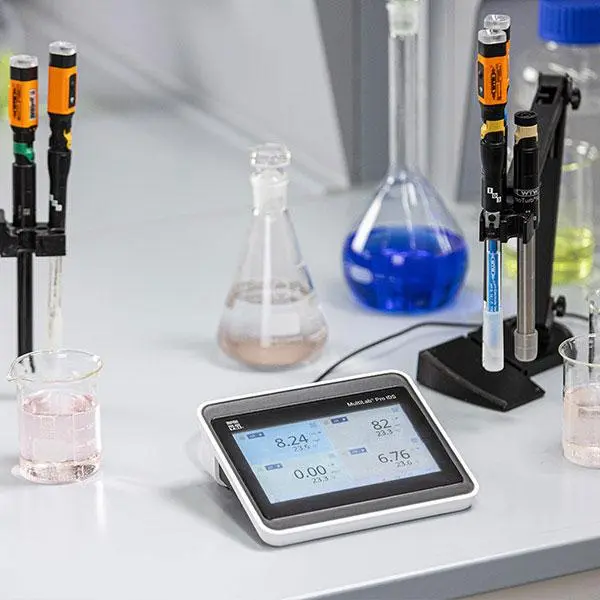
**1. Define Your Application First**
Start with where and why you need to measure.
- Warehouse temperature monitoring: Use a temperature and humidity data logger for continuous logging, alarm functions, and long battery life.
- HVAC temperature humidity monitoring: Use a handheld humidity meter or data logger with fast response and dew point calculation.
- Laboratory temperature monitoring: Use a high-accuracy data logger with an ISO calibration certificate (±0.5°C or better, ISO 17025 traceable).
- Pharmaceutical storage / Cold chain: Use a validated data logger with PDF/CSV export and 21 CFR Part 11 compliance.
- Manufacturing line QC: Use a portable handheld meter for spot checks and durability.
- Cleanroom monitoring: Use a fixed-mount or wireless data logger with multi-point networking.
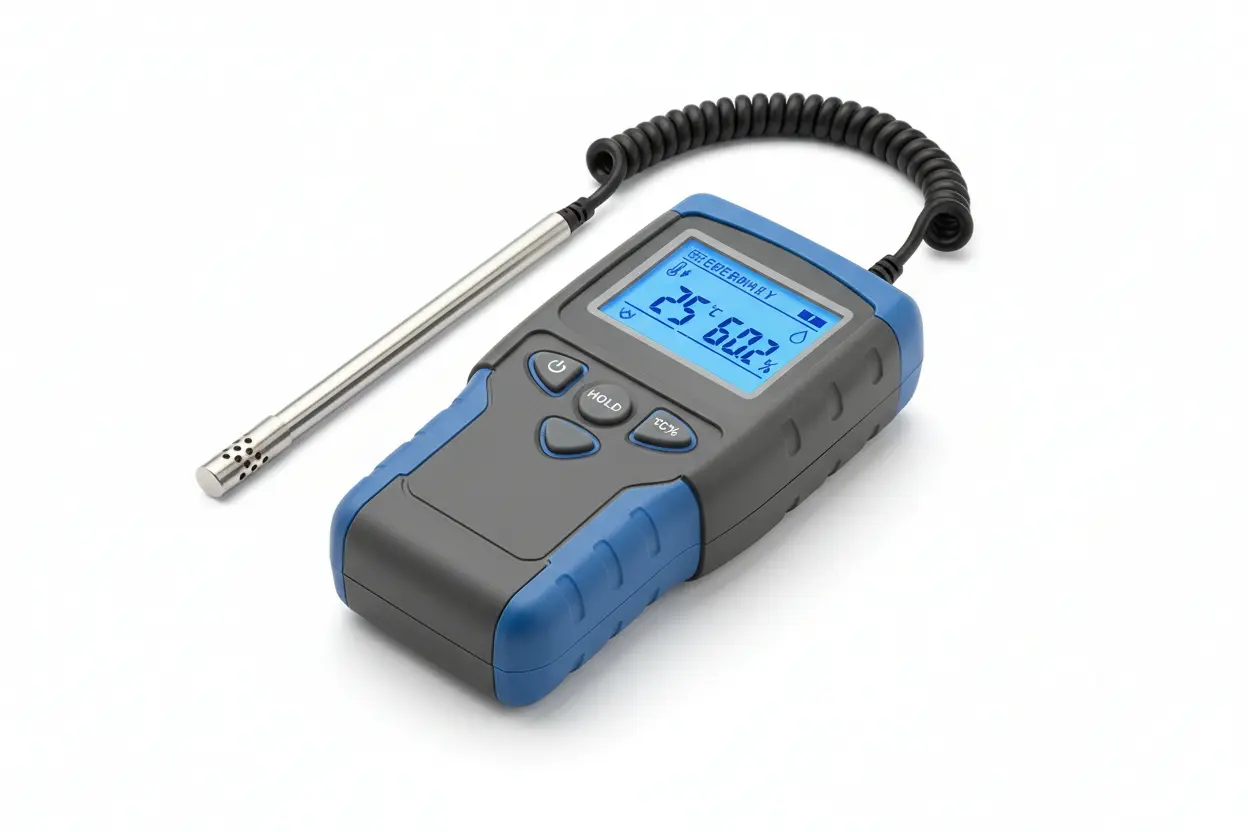
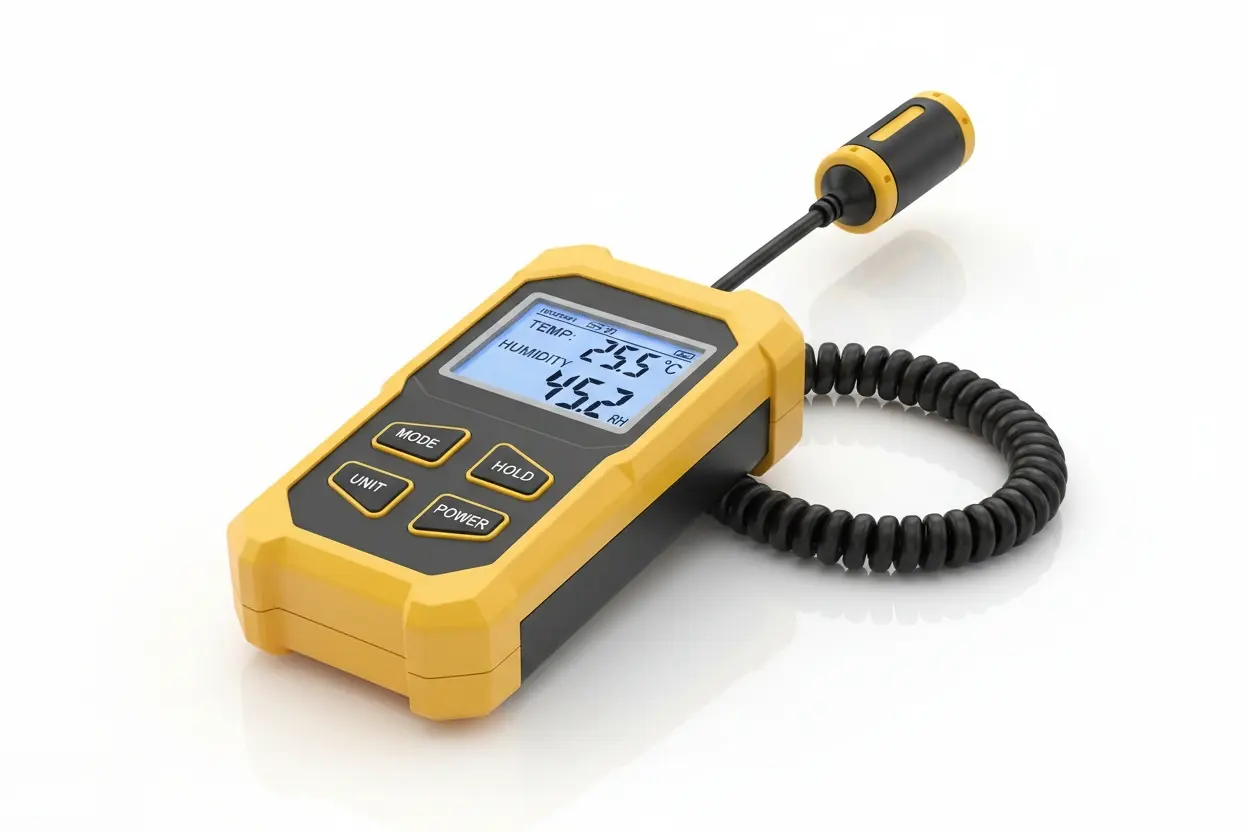
A handheld temperature humidity meter is ideal for spot checks, troubleshooting, and field audits. A temperature and humidity data logger is essential when you need continuous records for compliance, trend analysis, or warranty documentation.
Gerteise Tip: Not sure which category you fall into? Contact our instruments team with your measurement range and application—we typically reply within one business day. Visit: Define Your Application First
**2. Check Accuracy, Range & Resolution**
Accuracy is critical, but over-specifying increases cost without adding value. Before you buy a temperature and humidity meter, confirm these four parameters:
- Temperature range: -20°C to 60°C covers most indoor applications; industrial processes may need -40°C to +125°C.
- Humidity range: 0–100% RH is standard, but pharmaceutical warehouses often require 10–90% RH with ±3% accuracy.
- Accuracy: ±1°C and ±3% RH is sufficient for HVAC and general warehouse monitoring. Laboratories often require ±0.5°C or better.
- Resolution: 0.1°C / 0.1% RH is typical for modern digital instruments.
**3. Handheld Meter vs. Data Logger: Which Should You Buy?**
This is the most common question from industrial buyers.
Handheld Temperature Humidity Meter:
- Best for: Spot checks, field service, HVAC balancing
- Data storage: None (real-time display only)
- Software export: Usually not applicable
- Alarm function: Rare
- Battery life: Hours to days
- Calibration: Factory calibrated
- Typical price range: $50–$200
Temperature & Humidity Data Logger:
- Best for: Long-term monitoring, compliance, trend analysis
- Data storage: 16,000–32,000+ readings, SD card or internal memory
- Software export: PDF, Excel, CSV, or cloud export
- Alarm function: Yes—visual, audible, email, or SMS
- Battery life: 1–10 years depending on model
- Calibration: Factory or ISO 17025 calibrated
- Typical price range: $100–$600+ depending on memory and connectivity
For warehouse temperature monitoring systems, data loggers are almost always the better choice. Manual readings leave gaps—especially overnight and on weekends—that can lead to undetected excursions and product loss.
View our environmental testing instruments:
**4. Consider the Operating Environment**
Industrial instruments fail when they are not rated for the conditions. Before you purchase, evaluate:
- Temperature extremes: Will the device operate in freezers (-40°C) or near ovens (+80°C)?
- Condensation & high humidity: Look for IP-rated enclosures if the sensor will face washdown or outdoor exposure.
- Dust & particles: Warehouses and manufacturing floors need sealed housings.
- Vibration & transport: Handheld meters for field use should have rubberized armor and drop resistance.
- Indoor vs. outdoor: Outdoor applications require solar shields and weatherproof probes.
Gerteise supplies industrial-grade environmental monitoring instruments built for factory floors, refrigerated warehouses, and outdoor HVAC installations. Browse our range: Environmental-Testing-Instruments
**5. Calibration, Certificates & Data Management**
For quality-sensitive industries, calibration is not optional. If your measurement results support GMP / GDP compliance, FDA 21 CFR Part 11, pharmaceutical batch records, food safety audits (HACCP), or ISO 9001 quality systems, then you need measurement traceability and calibration certificates.
What to verify with your supplier:
-
Is ISO 17025 calibration available? (Not just factory calibration.)
-
What is the calibration interval? (Typically 12 months.)
-
Is the certificate included or an add-on?
-
Can data be exported in audit-friendly formats? (PDF, CSV, time-stamped.)
Gerteise provides Instrument devices with optional ISO calibration certificates and full documentation support